
Unified Travel:
Trainline + Cercanías
Integrating Spain's regional rail network into a global platform — unlocking complete journeys for millions of travellers and generating €6.5M in annualised revenue.
Context
The setup
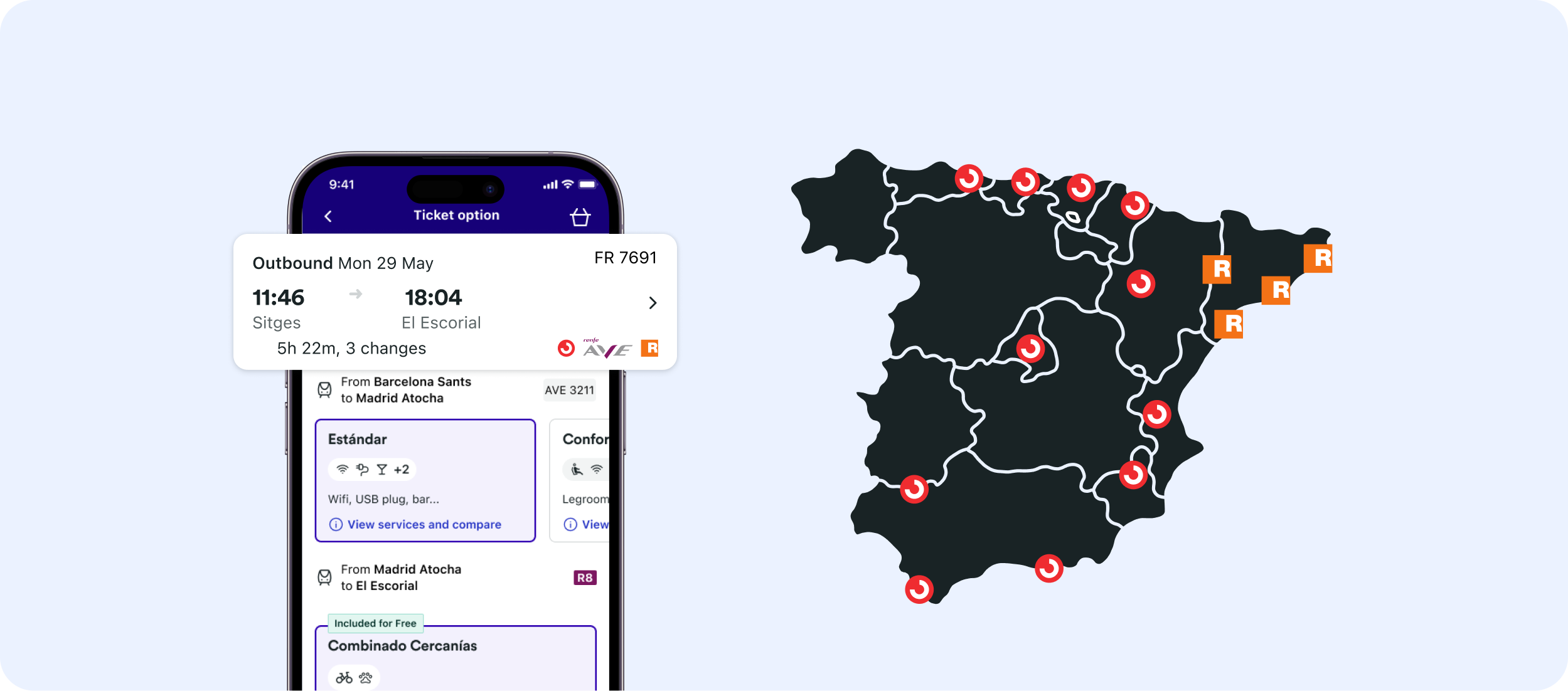
About Cercanias
Spain's regional commuter rail — operated separately from High Speed (AVE), with no shared booking infrastructure. Integration was technically non-trivial.
Team
Product manager
Product designer
Lead engineer
3 Front end
2 iOS
2 Android
2 Backend
Role & Scope
End-to-end design across both phases. I facilitated the commercial alignment that shaped the Parity-first strategy and owned the rationale for every trade-off.
Problem
The Fragmented Commute
In Spain, cercanias (regional commuter trains) operates separately from High Speed rail. For travelers, this meant checking two apps, buying two tickets, and navigating complex stations without guidance.
Why it mattered


Business Goal: First-to-market advantage
Become the first Spanish aggregator to offer comprehensive rail inventory — Regional + High Speed — in a single transaction.


User Problem: No complete journey
Users couldn't book a full trip (e.g. Barcelona Suburbs → Madrid) in one place. They abandoned to native apps, or didn't book at all.
Discovery
Key pain points
We surveyed 2,000 users and conducted 10 moderated interviews. Three key insights shaped our roadmap:
34%
Tech Failure
Encountered bugs or errors on the official provider site during booking.
50%
Info Blackout
Couldn't find disruption info or platform numbers when they needed them most.
33%
Station Anxiety
Felt uncertain about navigation at large interchange hubs like Atocha.
Strategy
Phased Rollout
Our goal was clear, but we wanted to do much more than simply retail the tickets. We recognised significant opportunities to improve the service, aiming to empower users with a smoother, more integrated journey-planning experience through our app.


The Bet
I advocated for a basic but functional integration in Phase 1 to prove commercial viability. The alternative — building the North Star experience upfront — carried six months of investment risk with no revenue signal. Parity gave us proof before ambition.


The Trade-off
Phase 1 launched without real-time disruption info. I accepted this gap explicitly — it was in the brief, documented, and used to set stakeholder expectations. That trade-off funded Phase 2 and the North Star build.
Evolution of the Solution
North Star
Live Updates + Smart Routing
FY25 H2
Phase 2
Parity + Combined Tickets
FY25 H1
Phase 1
Basic Integration
FY24
The solution
Two phases, two different problems
Phase 1 Flow
Solving Station Anxiety
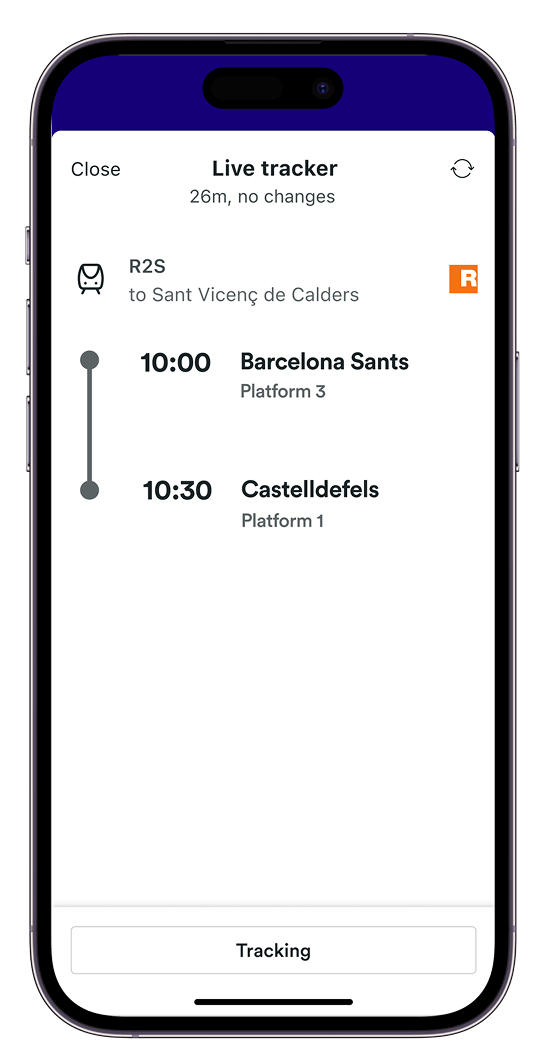
For Phase 1, we focused on the physical journey. We introduced a Live Tracker Widget that pulls platform numbers directly to the ticket screen.

Replaces confused wandering with clear, data-backed direction.
Self-serve cancellation options reduce CS tickets.
Phase 2 Flow
The "Holy Grail" Integration
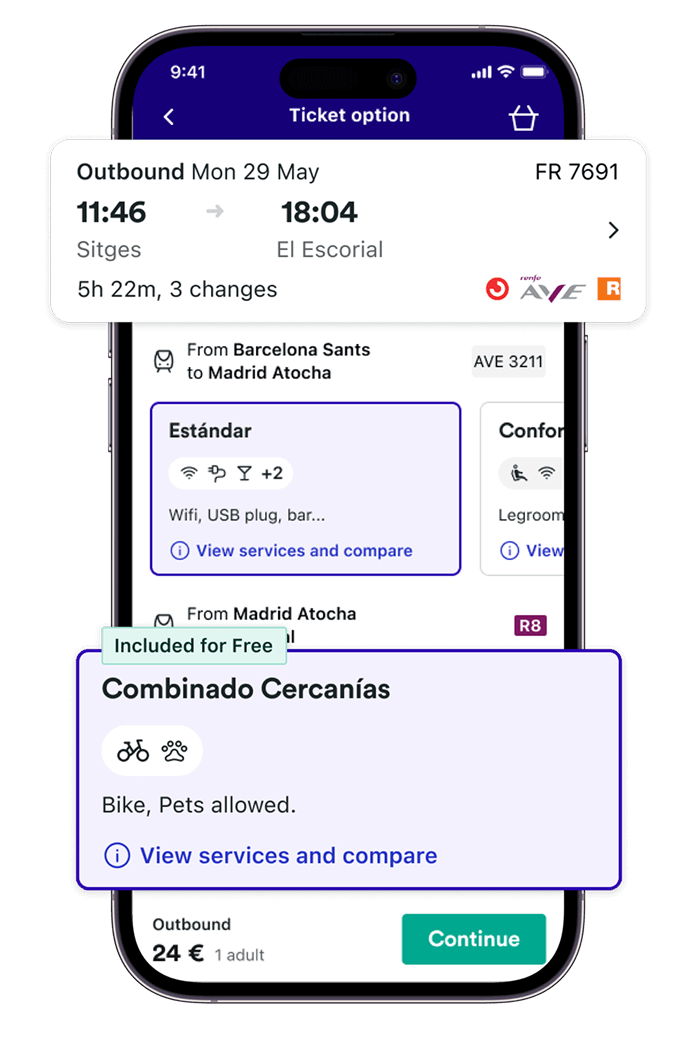
We enabled Combined Ticketing Users can now purchase a High-Speed leg (AVE) and a Regional leg (Cercanías) in a single basket.
Visual separation of ticket types for clarity.
Proactive push notifications for delays (closing the info gap).
Impact & Reflection
Navigating Ambiguity
Running two phases under commercial pressure sharpened how I think about sequencing. The call to ship Parity first — before the full experience existed — wasn't the obvious move. That argument held, and the numbers proved it.
Key Learnings

Data beats reassurance. Real-time platform numbers reduced station anxiety more reliably than any UX copy we could have written.
Phased delivery works when you name the trade-offs explicitly. Stakeholders backed Phase 1 because they understood exactly what we were deferring — and why.

Total Estimated Impact
€6.5M
Annualised Revenue (NTS)

€2M
Phase 1 — Basic Integration
€4.5M
Phase 2 — Combined Tickets


Unified Travel:
Trainline + Cercanías
Integrating Spain's regional rail network into a global platform — unlocking complete journeys for millions of travellers and generating €6.5M in annualised revenue.
Context
The setup
About Cercanias
Spain's regional commuter rail — operated separately from High Speed (AVE), with no shared booking infrastructure. Integration was technically non-trivial.
Team
Product manager
Product designer
Lead engineer
3 Front end
2 iOS
2 Android
2 Backend
Role & Scope
End-to-end design across both phases. I facilitated the commercial alignment that shaped the Parity-first strategy and owned the rationale for every trade-off.
Problem
The Fragmented Commute
In Spain, cercanias (regional commuter trains) operates separately from High Speed rail. For travelers, this meant checking two apps, buying two tickets, and navigating complex stations without guidance.
Why it mattered
Business Goal: First-to-market advantage
Become the first Spanish aggregator to offer comprehensive rail inventory — Regional + High Speed — in a single transaction.
User Problem: No complete journey
Users couldn't book a full trip (e.g. Barcelona Suburbs → Madrid) in one place. They abandoned to native apps, or didn't book at all.
Discovery
Key pain points
We surveyed 2,000 users and conducted 10 moderated interviews. Three key insights shaped our roadmap:
34%
Tech Failure
Encountered bugs or errors on the official provider site during booking.
50%
Info Blackout
Couldn't find disruption info or platform numbers when they needed them most.
33%
Station Anxiety
Felt uncertain about navigation at large interchange hubs like Atocha.
Strategy
Phased Rollout
Our goal was clear, but we wanted to do much more than simply retail the tickets. We recognised significant opportunities to improve the service, aiming to empower users with a smoother, more integrated journey-planning experience through our app.
The Bet
I advocated for a basic but functional integration in Phase 1 to prove commercial viability. The alternative — building the North Star experience upfront — carried six months of investment risk with no revenue signal. Parity gave us proof before ambition.
The Trade-off
Phase 1 launched without real-time disruption info. I accepted this gap explicitly — it was in the brief, documented, and used to set stakeholder expectations. That trade-off funded Phase 2 and the North Star build.
Evolution of the Solution
North Star
Live Updates + Smart Routing
FY25 H2
Phase 2
Parity + Combined Tickets
FY25 H1
Phase 1
Basic Integration
FY24
The solution
Two phases, two different problems
Phase 1 Flow
Solving Station Anxiety
For Phase 1, we focused on the physical journey. We introduced a Live Tracker Widget that pulls platform numbers directly to the ticket screen.
Replaces confused wandering with clear, data-backed direction.
Self-serve cancellation options reduce CS tickets.
Phase 2 Flow
The "Holy Grail" Integration
We enabled Combined Ticketing Users can now purchase a High-Speed leg (AVE) and a Regional leg (Cercanías) in a single basket.
Visual separation of ticket types for clarity.
Proactive push notifications for delays (closing the info gap).
Impact & Reflection
Navigating Ambiguity
Running two phases under commercial pressure sharpened how I think about sequencing. The call to ship Parity first — before the full experience existed — wasn't the obvious move. That argument held, and the numbers proved it.
Key Learnings
Data beats reassurance. Real-time platform numbers reduced station anxiety more reliably than any UX copy we could have written.
Phased delivery works when you name the trade-offs explicitly. Stakeholders backed Phase 1 because they understood exactly what we were deferring — and why.
Total Estimated Impact
€6.5M
Annualised Revenue (NTS)

€2M
Phase 1 — Basic Integration
€4.5M
Phase 2 — Combined Tickets

Unified Travel:
Trainline + Cercanías
Integrating Spain's regional rail network into a global platform — unlocking complete journeys for millions of travellers and generating €6.5M in annualised revenue.
Context
The setup
About Cercanias
Spain's regional commuter rail — operated separately from High Speed (AVE), with no shared booking infrastructure. Integration was technically non-trivial.
Team
Product manager
Product designer
Lead engineer
3 Front end
2 iOS
2 Android
2 Backend
Role & Scope
End-to-end design across both phases. I facilitated the commercial alignment that shaped the Parity-first strategy and owned the rationale for every trade-off.
Problem
The Fragmented Commute
In Spain, cercanias (regional commuter trains) operates separately from High Speed rail. For travelers, this meant checking two apps, buying two tickets, and navigating complex stations without guidance.
Why it mattered
Business Goal: First-to-market advantage
Become the first Spanish aggregator to offer comprehensive rail inventory — Regional + High Speed — in a single transaction.
User Problem: No complete journey
Users couldn't book a full trip (e.g. Barcelona Suburbs → Madrid) in one place. They abandoned to native apps, or didn't book at all.
Discovery
Key pain points
We surveyed 2,000 users and conducted 10 moderated interviews. Three key insights shaped our roadmap:
34%
Tech Failure
Encountered bugs or errors on the official provider site during booking.
50%
Info Blackout
Couldn't find disruption info or platform numbers when they needed them most.
33%
Station Anxiety
Felt uncertain about navigation at large interchange hubs like Atocha.
Strategy
Phased Rollout
Our goal was clear, but we wanted to do much more than simply retail the tickets. We recognised significant opportunities to improve the service, aiming to empower users with a smoother, more integrated journey-planning experience through our app.
The Bet
I advocated for a basic but functional integration in Phase 1 to prove commercial viability. The alternative — building the North Star experience upfront — carried six months of investment risk with no revenue signal. Parity gave us proof before ambition.
The Trade-off
Phase 1 launched without real-time disruption info. I accepted this gap explicitly — it was in the brief, documented, and used to set stakeholder expectations. That trade-off funded Phase 2 and the North Star build.
Evolution of the Solution
North Star
Live Updates + Smart Routing
FY25 H2
Phase 2
Parity + Combined Tickets
FY25 H1
Phase 1
Basic Integration
FY24
The solution
Two phases, two different problems
Phase 1 Flow
Solving Station Anxiety
For Phase 1, we focused on the physical journey. We introduced a Live Tracker Widget that pulls platform numbers directly to the ticket screen.
Replaces confused wandering with clear, data-backed direction.
Self-serve cancellation options reduce CS tickets.
Phase 2 Flow
The "Holy Grail" Integration
We enabled Combined Ticketing Users can now purchase a High-Speed leg (AVE) and a Regional leg (Cercanías) in a single basket.
Visual separation of ticket types for clarity.
Proactive push notifications for delays (closing the info gap).
Impact & Reflection
Navigating Ambiguity
Running two phases under commercial pressure sharpened how I think about sequencing. The call to ship Parity first — before the full experience existed — wasn't the obvious move. That argument held, and the numbers proved it.
Key Learnings
Data beats reassurance. Real-time platform numbers reduced station anxiety more reliably than any UX copy we could have written.
Phased delivery works when you name the trade-offs explicitly. Stakeholders backed Phase 1 because they understood exactly what we were deferring — and why.
Total Estimated Impact
€6.5M
Annualised Revenue (NTS)

€2M
Phase 1 — Basic Integration
€4.5M
Phase 2 — Combined Tickets

